Many investors today look only at a company’s profits or how fast it’s growing. But they forget something equally important: “Regulatory Risk.”
Now, you might wonder, what is regulatory risk?
In simple words, it’s the risk that comes from new government rules, laws, or policies that can negatively impact a company’s business.
And in India, where the government plays a big role in many sectors, this risk is very real and growing every year.
Let me walk you through 5 well-known Indian companies that are facing serious regulatory pressure right now.
These are popular names that many people have in their portfolios.
So let’s go one by one. And don’t worry, I’ll explain everything in simple, easy terms.
1. ITC – India’s Cigarette Giant Under the Scanner
ITC is one of India’s oldest and most well-known companies. You may know them for their brands like Sunfeast, Aashirvaad, Bingo, and Savlon.
But the reality is, cigarettes are still the heart of ITC’s business.
Here’s a quick breakdown:
- 80% of India’s legal cigarette market is controlled by ITC
- Cigarettes make up 40% of ITC’s revenue but 81% of its profit
- Other segments like hotels, FMCG, and agri-business are growing, but not enough to replace cigarettes
So, what’s the risk?
- Cigarettes are highly taxed to discourage people from smoking
- The government controls advertising, packaging, and even where and how these products are sold
- Any increase in tax or new restrictions can hurt ITC’s profits overnight
Bottom line – Unless ITC shifts away from cigarettes faster, it remains exposed to major regulatory shocks.
2. BSE – Growing Fast but Watched Closely by SEBI
BSE (Bombay Stock Exchange) is one of India’s oldest and most respected financial institutions. It helps investors trade in stocks, bonds, currencies, and more.
It’s a listed company that earns money from:
- Listing new companies
- Transaction charges from trading
- Selling financial data
But here’s the issue:
- SEBI (the market regulator) is becoming very strict with stock exchanges
- Rules are changing for how long derivative contracts can be traded
- Any mistake in oversight or system failure can bring serious penalties
So, what’s the risk?
- Strong growth is attracting more attention from regulators
- Sudden policy changes by SEBI can impact revenues and reduce volumes
Bottom line – BSE is growing fast, but it’s also on SEBI’s radar. Investors need to stay alert.
3. Indian Energy Exchange (IEX) – A Powerhouse Losing Power?
IEX is India’s largest platform to trade electricity.
If you’ve never heard of electricity trading, think of it like a stock exchange, but for power.
IEX has a huge 85% market share and connects power producers, states, and big companies.
But here’s the challenge:
- A new rule called “Market Coupling” is coming
- It may combine all power exchanges into one pricing system
- That means IEX may lose its pricing control and competitive edge
Why should you care?
- If market coupling becomes permanent, IEX’s dominance may vanish
- Profit margins could fall and the company may lose many of its loyal customers
Bottom line – IEX is strong today, but policy changes may make the future uncertain.
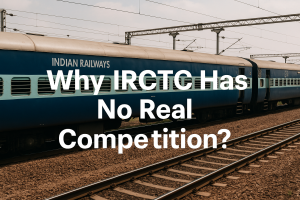
4. IRCTC – Big Monopoly, Bigger Control
You’ve probably booked your train ticket through IRCTC at least once.
This government-owned company handles:
- Online train bookings
- Catering and food delivery on trains
- Tourism packages
- Rail Neer (packaged drinking water)
Where does it earn money?
- Catering: 47%
- Ticketing: 30%
- Tourism: 16%
- Rail Neer: 7%
So, what’s the issue?
- IRCTC is controlled by the Ministry of Railways
- It cannot take major decisions independently
- The government decides pricing, fees, and even business expansion
Bottom line – While it’s a monopoly, IRCTC is not truly free. Any change in railway policies can hit its revenue instantly.
5. United Breweries – King of Beers, But Rules Keep Changing
United Breweries is the company behind the popular Kingfisher beer brand.
It controls more than 50% of the Indian beer market and is part-owned by Heineken, the global beer giant.
What’s the risk here?
- Alcohol laws differ from state to state in India
- Taxes on beer and liquor are very high and keep changing
- Governments also control how much you can sell, where you can sell, and at what price
Bottom line – High taxes, unpredictable rules, and state-level decisions make this a tough business to operate in.
Final Words
Investing is not just about what looks good today, but what can survive tomorrow.
If you’re holding any of these 5 companies — or planning to invest — it’s important to ask a few simple questions:
Ask yourself:
- Is the company’s profit too dependent on one sector or product?
- Can a sudden government policy badly affect its business?
- Does the company operate in a monopoly or duopoly, where the government might step in?
Just looking at profits or stock prices is not enough anymore.
You must also understand how regulatory risks can impact your investment.
Regulatory risk may not show up in the charts, but it can wipe out profits, hurt stock prices, and bring sudden surprises.
So keep your eyes open. If you’re already invested in these companies, don’t panic. Just stay updated. If you’re thinking of entering, make sure you do so with full awareness of these risks.
Stay smart, Stay informed, and Happy investing.